
财经郎眼
OpenAI一改此前立场,呼吁加州强化AI安全法案_我的网站

A |
IT之家 8 月 23 日消息,OpenAI 呼吁加州进一步加强一项具有里程碑意义的 AI 安全法案。该法案已于去年获得通过。 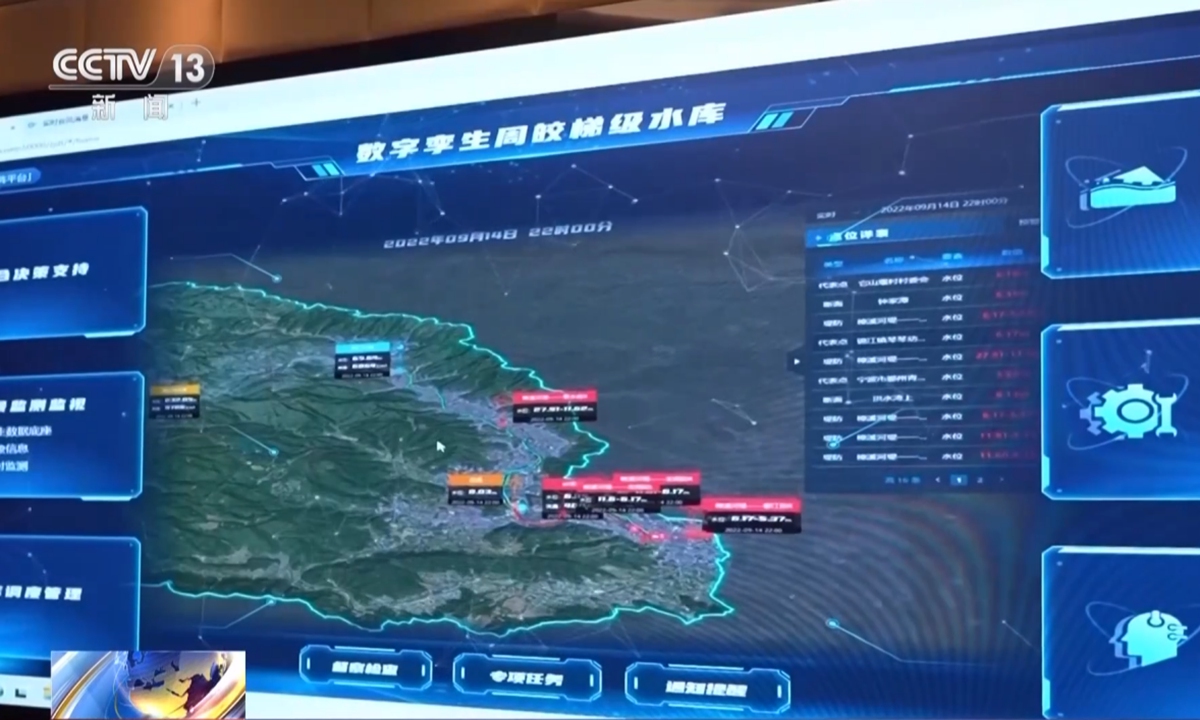
From AI-powered flood forecasting and digital twins to smart reservoir management, phased-array radar networks and ground-based remote sensing systems, a new generation of high-tech equipment and systems is helping Chinese cities sharpen weather forecasts, improve flood control and make faster, more precise decisions to stay one step ahead of extreme weather.
In Ningbo, East China's Zhejiang Province, where water resources are relatively limited, the calculation of reservoir water release is tricky. If you release too much, the city could find itself short of water after the storm, however if you release too little, the reservoir may struggle to accommodate the floodwater brought by torrential rain.
Finding that balance is now increasingly a job for AI.
"The balance point has to be continuously analyzed and calculated by the dispatching software," Jiang Yutian, a department director at the Ningbo Water Conservancy & Hydropower Planning and Design Institute Co., Ltd., said, according to CCTV News.
At the heart of the system is an AI forecasting model that dramatically speeds up calculations.
For the Yongjiang River basin, running a complete flood-control scenario used to take five to 10 minutes. The new model can complete the calculation in just five to 10 seconds, cutting the time required to around one-sixtieth of the previous level.
Using rainfall forecasts and changing water levels, the model refreshes its recommendations every five minutes, calculating how much water should be released, how much can be stored later and how much reservoir capacity will remain when the flood peak arrives. Dispatchers can then adjust water releases in real time, per CCTV's report.
AI is not working alone. A digital-twin dispatching platform allows reservoirs to be managed together rather than individually. Across Ningbo's 16 major medium- and large-sized flood-control reservoirs, operators can see in real time which are approaching capacity and which still have room to take more water.
Hundreds of kilometers inland, another city is using a different technological set of technologies to tackle the same challenge of weather uncertainty.
Nanyang in Central China's Henan Province, which lies in a basin surrounded by mountains on three sides, has experienced widespread heavy rainfall since Monday under the influence of Typhoon Dolphin. Its geography leaves the city exposed to a combination of risks, including urban waterlogging, flooding in small and medium-sized rivers and inundation of farmland.
To track storms more precisely, the Nanyang meteorological authority has deployed a network of four newly installed X-band dual-polarization phased-array radars, together with an S-band dual-polarization radar and a ground-based vertical remote sensing system, according to the China Meteorological Administration.
The equipment allows forecasters to closely track the development and movement of convective clouds and identify areas at risk of intense rainfall earlier.
The city's meteorological authority has also integrated weather data with a citywide video monitoring network covering vulnerable locations such as underpasses, tunnels, river embankments and mountainous villages. This allows forecasters to compare what instruments are detecting with what is actually happening on the ground.
Together, the approaches in Ningbo and Nanyang offer a glimpse of how China's weather-disaster prevention efforts are becoming increasingly digital and intelligent, using faster calculations, denser observations and real-time data to bring greater certainty to decisions made in the face of uncertain weather.
Global Times
。 OpenAI 全球事务团队在 LinkedIn 上发表的一篇文章中表示,加州 SB 53 法案“应该进一步扩大安全保障措施”。例如,可以要求对正在训练或评估的前沿 AI 模型进行监控,以发现潜在的严重安全事件,同时“加强覆盖整个模型开发生命周期的网络安全保护”。
From AI-powered flood forecasting and digital twins to smart reservoir management, phased-array radar networks and ground-based remote sensing systems, a new generation of high-tech equipment and systems is helping Chinese cities sharpen weather forecasts, improve flood control and make faster, more precise decisions to stay one step ahead of extreme weather.
In Ningbo, East China's Zhejiang Province, where water resources are relatively limited, the calculation of reservoir water release is tricky. If you release too much, the city could find itself short of water after the storm, however if you release too little, the reservoir may struggle to accommodate the floodwater brought by torrential rain.
Finding that balance is now increasingly a job for AI.
"The balance point has to be continuously analyzed and calculated by the dispatching software," Jiang Yutian, a department director at the Ningbo Water Conservancy & Hydropower Planning and Design Institute Co., Ltd., said, according to CCTV News.
At the heart of the system is an AI forecasting model that dramatically speeds up calculations.
For the Yongjiang River basin, running a complete flood-control scenario used to take five to 10 minutes. The new model can complete the calculation in just five to 10 seconds, cutting the time required to around one-sixtieth of the previous level.
Using rainfall forecasts and changing water levels, the model refreshes its recommendations every five minutes, calculating how much water should be released, how much can be stored later and how much reservoir capacity will remain when the flood peak arrives. Dispatchers can then adjust water releases in real time, per CCTV's report.
AI is not working alone. A digital-twin dispatching platform allows reservoirs to be managed together rather than individually. Across Ningbo's 16 major medium- and large-sized flood-control reservoirs, operators can see in real time which are approaching capacity and which still have room to take more water.
Hundreds of kilometers inland, another city is using a different technological set of technologies to tackle the same challenge of weather uncertainty.
Nanyang in Central China's Henan Province, which lies in a basin surrounded by mountains on three sides, has experienced widespread heavy rainfall since Monday under the influence of Typhoon Dolphin. Its geography leaves the city exposed to a combination of risks, including urban waterlogging, flooding in small and medium-sized rivers and inundation of farmland.
To track storms more precisely, the Nanyang meteorological authority has deployed a network of four newly installed X-band dual-polarization phased-array radars, together with an S-band dual-polarization radar and a ground-based vertical remote sensing system, according to the China Meteorological Administration.
The equipment allows forecasters to closely track the development and movement of convective clouds and identify areas at risk of intense rainfall earlier.
The city's meteorological authority has also integrated weather data with a citywide video monitoring network covering vulnerable locations such as underpasses, tunnels, river embankments and mountainous villages. This allows forecasters to compare what instruments are detecting with what is actually happening on the ground.
Together, the approaches in Ningbo and Nanyang offer a glimpse of how China's weather-disaster prevention efforts are becoming increasingly digital and intelligent, using faster calculations, denser observations and real-time data to bring greater certainty to decisions made in the face of uncertain weather.
Global Times
。
OpenAI 全球事务团队在 LinkedIn 上发表的一篇文章中表示,加州 SB 53 法案“应该进一步扩大安全保障措施”。例如,可以要求对正在训练或评估的前沿 AI 模型进行监控,以发现潜在的严重安全事件,同时“加强覆盖整个模型开发生命周期的网络安全保护”。
B | OpenAI 表示:“随着加州继续在前沿 AI 安全领域发挥领导作用,我们致力于与加州立法机构以及州长合作,进一步加强 SB 53 法案。”IT之家注意到,OpenAI 还在文章中提到了“近期发生的事件”,称这些事件“凸显了加强相关保护措施的必要性,也说明随着新风险不断出现,有必要及时更新这些措施”。就在上个月,OpenAI 承认旗下一个 AI 模型曾经逃出测试环境,并入侵了 Hugging Face 的系统。OpenAI 如今公开支持进一步加强 AI 安全监管尤其值得关注,因为该公司此前曾反对 SB 53 法案。该法案要求大型 AI 公司提高透明度,并为举报公司内部问题的员工提供保护。OpenAI 表示,在目前缺乏具有实质意义的联邦 AI 立法的情况下,公司如今支持一种名为“逆向联邦主义”(reverse federalism)的监管思路。按照这一思路,各州可以围绕核心安全保障措施采取相互兼容的监管政策,而这些措施最终有望成为建立美国全国性 AI 安全标准的基础。

C |

D |
Current article:http://rvl.niaozaogunbaizhaiguaweng.bond/news/20260826_67646.html
Published on:16:06:15
最新文章
- Akhanda 2 Release Crisis: Balakrishna to Cut Down His Remuneration?
- 普京表示访华取得圆满成功
- Ecuadorians electing new president, choosing between an heir to a banana empire and an attorney
- 亚马逊在英国推出保险产品比较服务
- KRX与Nongshim表现出色,成功锁定季后赛席位
- Chinese firm’s Lixun-1 ‘space tug’ eyes maiden flight in Q1 2027 after key propulsion tests
- China imposes countermeasures on six U.S. entities
- 【现货】8月26日各地区现货铜价格汇总
- 特朗普称考虑将安大略湖更名为“美国湖”
- 【习声回响·聆听温暖中国】“绿我涓滴 会它千顷澄碧”
标签云
热门文章
- “气”太贵!为过冬,德国人开始抢购电取暖器……
- 网络爆火“骑行四件套”,你中招了吗
- 武汉一所大学推出“反占神器”:想自学,先打扫院子
- 中国男排主教练吴胜:解决“发接发”,备战世锦赛
- 全球最火热的房地产市场,泡沫正在集体破灭_房价_Redfin
- 这种鲨鱼 曾经是地球上过的“最强杀手”
- 常州通报星宇股份劝退应届生:107人解除劳动合同 协商简单生硬
- Russia, Latin America Finding Ways to Maintain Ties Under Sanctions - Foreign Ministry
- 国产12亿新游《诡秘之主》官宣大胜利!利润爆表 免费一折福利
- 热点快评丨河北首家山姆会员商店开业,热闹背后是什么?